First sentence:
"For sixty-five days, the Mayflower had blundered her way through storms and headwinds, her bottom a shaggy pelt of seaweed and barnacles, her leaky decks spewing salt water onto her passengers' devoted heads."
Description:
"How did America begin?
That simple question launches acclaimed author Nathaniel Philbrick on an extraordinary journey to understand the truth behind our most sacred national myth: the voyage of the Mayflower and the settlement of Plymouth Colony. As Philbrick reveals in this electrifying new history of the Pilgrims, the story of Plymouth Colony was a fifty-five year epic that began in peril and ended in war. New England erupted into a bloody conflict that nearly wiped out the English colonists and natives alike/ These events shaped the existing communities and the country that would grow from them." -- from the back cover
My thoughts:
I learned a lot from this book concerning early interactions between Europeans and the various tribes in New England. For example, I didn't know, before reading the book, that Plymouth was a separate colony from the Massachusetts Bay colony to the north. I also learned that a big part of the reasons for the wars between the settlers and the natives was desire for power and for land.
Date read: 10/1/2016
Rating: 3*/5 = good
Genre: History
ISBN-10: 0143111973
ISBN-13: 9780143111979
Publisher: Penguin Books
Year: 2006
# of pages: 463
Binding: Trade Paperback
LibraryThing page
Showing posts with label nonfiction. Show all posts
Showing posts with label nonfiction. Show all posts
Sunday, October 2, 2016

Thursday, May 28, 2015
May 2015: Sea of Glory; The Last Hot Time; Gray Mountain

My thoughts:
I liked this book about the U.S. Exploring Expedition. Philbrick's prose nicely details both the discoveries and the people involved.
Date read: 5/15/2015
Rating: 3*/5 = good
Genre: History
LibraryThing page

My thoughts:
I liked this fantasy of a man who crosses worlds to become a doctor for otherworldly characters.
Date read: 5/21/2015
Rating: 3*/5 = good
Genre: Fantasy
LibraryThing page

My thoughts:
I liked this book about a lawyer who enters a new world and discovers she can make a difference in people's lives.
Date read: 5/27/2015
Rating: 3*/5 = good
Genre: Fiction
LibraryThing page
Tuesday, December 16, 2014
Ship of Gold in the Deep Blue Sea by Gary Kinder
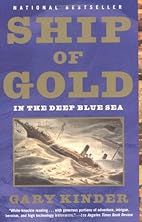
"As was his habit each morning, James Marshall rose early to walk the gravel bar along his millrace to see if the water was yet deep enough and swift enough to turn the wheel for the sawmill he had built for John Sutter."
Description:
"In one of the most exciting adventure stories of our time, Gary Kinder combines maritime disaster with visionary underwater technology. In September 1857, the SS Central America, a side-wheel steamer carrying passengers returning from the gold fields of California, went down during a hurricane off the Carolina coast. It would be the worst peacetime disaster at sea in American history, claiming more than 400 lives and 21 tons of gold. In the 1980s a maverick engineer named Tommy Thompson set out to find the wreck of the Central America and salvage its treasure from the ocean floor.
With nail-biting suspense, Kinder reconstructs the terror of the Central America's last days, when passengers bailed sea water from the hold, then chopped up the ship's timbers to use as impromptu life rafts before being cast into the sea themselves. He goes on to chronicle Thompson's epic quest for the lost vessel, an enterprise marked by hair-raising weather, the hostility of the deep ocean at 8,000 feet, highly experimental technology, and unscrupulous rival treasure-hunters. The result is a magnificent tale, filled with heroism, entrepreneurialism, and perseverance." -- from the back cover
My thoughts:
I enjoyed this book about a shipwreck - both the history of the wreck and what led to it, and the struggle to find the wreck over a century later.
Date read: 12/15/2014
Book #: 43
Rating: 3*/5 = good
Genre: Nonfiction
ISBN-10: 0375703373
ISBN-13: 9780375703379
Publisher: Vintage Books
Year: 1998
# of pages: 507
Binding: Trade Paperback
LibraryThing page
Sunday, December 14, 2014
As I Knew Him: My Dad, Rod Serling by Anne Serling
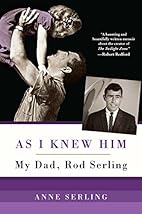
"The last time I saw my father, it was 1975."
Description:
In Twilight Zone reruns, I search for my father in the man on the screen, but I can’t always find him there. Instead, he appears in unexpected ways. Memory summoned by a certain light, a color, a smell—and I see him again on the porch of our old red lakeside cottage, where I danced on the steps as a child.
To Anne Serling, the imposing figure the public saw hosting The Twilight Zone each week, intoning cautionary observations about fate, chance, and humanity, was not the father she knew. Her fun-loving dad would play on the floor with the dogs, had nicknames for everyone in the family, and was apt to put a lampshade on his head and break out in song. He was her best friend, her playmate, and her confidant.
After his unexpected death at 50, Anne, just 20, was left stunned. Gradually, she found solace for her grief—talking to his friends, poring over old correspondence, and recording her childhood memories. Now she shares personal photos, eloquent, revealing letters and beautifully rendered scenes of his childhood, war years, and their family’s time together. Idyllic summers in upstate New York, the years in Los Angeles, and the myriad ways he filled their time with laughter, strength, and endearing silliness—all are captured here with deep affection and candor.
Though begun in loss, Anne’s story is a celebration of her extraordinary relationship with her father and the qualities she came to prize through him—empathy, kindness, and an uncompromising sense of social justice. As I Knew Him is a lyrical, intimate tribute to Rod Serling’s legacy as visionary, storyteller, and humanist, and a moving testament to the love between fathers and daughters. -- from the inside flap
My thoughts:
This is a wonderful biography of Rod Serling and memoir of his daughter Anne. Like many, I am a Twilight Zone fan, and this book revealed not just how the show began but Rod's heart and interest in telling the stories he wanted to tell.
Date read: 12/13/2014
Book #: 42
Rating: 4*/5 = great
Genre: Memoir/Biography
ISBN-10: 0806536152
ISBN-13: 9780806536156
Publisher: Kensington Publishing Corp.
Year: 2013
# of pages: 276
Binding: Hardcover
LibraryThing page
Saturday, October 25, 2014
Chasing Shackleton by Tim Jarvis

"I thought I knew Antarctica by now."
Description:
"In this extraordinary adventure memoir and tie-in to the PBS documentary, Tim Jarvis, one of the world's leading explorers, describes his modern-day journey to retrace, for the first time ever—and in period clothing and gear—the legendary 1914 expedition of Sir Ernest Shackleton.
In early 1914, British explorer Sir Ernest Shackleton and his team sailed for Antarctica, attempting to be the first to reach the South Pole. Instead of glory, Shackleton and his crew found themselves in an epic struggle for survival: a three-year odyssey on the ice and oceans of the Antarctic that endures as one of the world’s most famous tales of adventure, endurance, and leadership ever recorded.
In the winter of 2013, celebrated explorer Tim Jarvis, a veteran of multiple polar expeditions, set out to recreate Sir Ernest Shackleton’s treacherous voyage over sea and mountain, outfitted solely with authentic equipment—clothing, boots, food, and tools—from Shackleton’s time, a feat that has never been successfully accomplished.
Shackleton's Epic is the remarkable record of Jarvis and his team’s epic journey. Beautifully designed and illustrated with dozens of photographs from the original voyage and its modern reenactment, it is a visual feast for readers and historians alike, and an essential new chapter in the story that has inspired adventurers across every continent for a century." -- from Amazon.com
My thoughts:
I enjoyed reading this adventure that recreated Shackleton's voyage and mountain crossing. After I read the book, I saw and enjoyed the documentary which included Jarvis and his crew toasting Shackleton at his grave on South Georgia island.
Date read: 10/24/2014
Book #: 39
Rating: 3*/5 = good
Genre: Nonfiction/Adventure
ISBN-10: 0062282735
ISBN-13: 9780062282736
Publisher: William Morrow
Year: 2014
# of pages: 272
Binding: Hardcover
LibraryThing page
Saturday, October 4, 2014
George Washington's Secret Six by Brian Kilmeade

"He was twenty-one years old and knew that in a matter of moments he would die."
Description:
"When General George Washington beat a hasty retreat from New York City in August 1776, many thought the American Revolution might soon be over. Instead, Washington rallied—thanks in large part to a little-known, top-secret group called the Culper Spy Ring.
Washington realized that he couldn’t beat the British with military might, so he recruited a sophisticated and deeply secretive intelligence network to infiltrate New York. So carefully guarded were the members’ identities that one spy’s name was not uncovered until the twentieth century, and one remains unknown today. But by now, historians have discovered enough information about the ring’s activities to piece together evidence that these six individuals turned the tide of the war.
Drawing on extensive research, Brian Kilmeade and Don Yaeger have painted compelling portraits of George Washington’s secret six:
- Robert Townsend, the reserved Quaker merchant and reporter who headed the Culper Ring, keeping his identity secret even from Washington;
- Austin Roe, the tavern keeper who risked his employment and his life in order to protect the mission;
- Caleb Brewster, the brash young longshoreman who loved baiting the British and agreed to ferry messages between Connecticut and New York;
- Abraham Woodhull, the curmudgeonly (and surprisingly nervous) Long Island bachelor with business and family excuses for traveling to Manhattan;
- James Rivington, the owner of a posh coffeehouse and print shop where high-ranking British officers gossiped about secret operations;
- Agent 355, a woman whose identity remains unknown but who seems to have used her wit and charm to coax officers to share vital secrets.
American Revolution." - from Amazon.com
My thoughts:
This is a fascinating book about another side to the American Revolution. Recently I've started watching the AMC drama Turn: Washington's Spies about the same topic and I highly recommend it.
Date read: 10/3/2014
Book #: 36
Rating: 3*/5 = good
Genre; Thriller
ISBN-10: 1595231102
ISBN-13: 9781595231109
Publisher: Sentinel
Year: 2014
# of pages: 272
Binding: Trade Paperback
LibraryThing page
Tuesday, September 2, 2014
Into Thin Air by Jon Krakauer

"Straddling the top of the world, one foot in China and the other in Nepal, I cleared the ice from my oxygen mask, hunched a shoulder against the wind, and stared absently down at the vastness of Tibet."
Description:
"When Jon Krakauer reached the summit of Mt. Everest in the early afternoon of May 10, 1996, he hadn't slept in fifty-seven hours and was reeling from the brain-altering effects of oxygen depletion. As he turned to begin the perilous descent from 29, 028 feet (roughly the cruising altitude of an Airbus jetliner), twenty other climbers were still pushing doggedly to the top, unaware that the sky had begun to roil with clouds. . .
In this definitive account of the deadliest season in the history of Everest, Jon Krakauer takes the reader step-by-step from Katmandu to the mountain's deadly pinnacle, unfolding a breathtaking story that will by turn thrill and terrify." -- from the back cover
My thoughts:
This is a bittersweet true adventure tale of the 1996 tragedy on Mount Everest that claimed the lives of twelve climbers. Krakauer recounts with brutal honesty what went wrong amidst the heroism of climbers both on his expedition and from others.
Date read: 9/1/2014
Book #: 32
Rating: 3*/5 = good
Genre: Nonfiction/Travel/Memoir
ISBN-10: 0385492081
ISBN-13: 9780385492089
Publisher: Anchor Books
Year: 1997
# of pages: 378
Binding: Mass Market Paperback
LibraryThing page
Thursday, June 26, 2014
Fastnet, Force 10 by John Rousmaniere
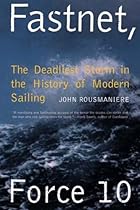
"When the gale swept over Ireland during Monday night, it seemed like any other summer storm that catches a few boats out in the Western Approaches to England."
Description:
On August 11, 1979, 303 yachts began the 600-mile Fastnet Race from Cowes on the Isle of Wight to Fastnet Rock off the Irish coast and back. It began in fine weather, then suddenly became a terrifying ordeal. A Force 10, sixty-knot storm swept across the North Atlantic with a speed that confounded forecasters, slamming into the fleet with epic fury. For twenty hours, 2,500 men and women were smashed by forty-foot breaking waves, while rescue helicopters and lifeboats struggled to save them.
By the time the race was over, fifteen people had died, twenty-four crews had abandoned ship, five yachts had sunk, 136 sailors had been rescued, and only 85 boats had finished the race. John Rousmaniere was there, and he tells the story as only on who has sailed through the teeth of a killer storm can. In a new introduction for this edition, he discusses the effects of the tragedy and whether it could happen again today." -- from the back cover
My thoughts:
This is an exciting book about storms and the people who battle them. I especially liked learning about the life boats and helicopters and the men who rescued all they could.
Date read: 6/25/2014
Book #: 20
Rating: 3*/5 = good
Genre: Nonfiction, Adventure
ISBN-10: 0393308650
ISBN-13: 9780493308655
Publisher: W.W. Norton
Year: 1980; 2000 (this edition)
# of pages: 266
Binding: Trade Paperback
LibraryThing page
Wednesday, January 8, 2014
The Disappearing Spoon by Sam Kean

"As a child in the early 1980s, I tended to talk with things in my mouth - food, dentist's tubes, balloons that would fly away, whatever - and if no one else was around, I'd talk anyway."
Description:
"Why did Gandhi hate iodine (I, 53)? Why did the Japanese kill Godzilla with missiles made of cadmium (Cd, 48)? How did radium (Ra, 88) ruin Marie Curie’s reputation? And why did tellurium (Te, 52) lead to the most bizarre gold rush in history?
The periodic table is one of our crowning scientific achievements, but it’s also a treasure trove of passion, adventure, betrayal, and obsession. The fascinating tales in The Disappearing Spoon follow carbon, neon, silicon, gold, and every single element on the table as they play out their parts in human history, finance, mythology, conflict, the arts, medicine, and the lives of the (frequently) mad scientists who discovered them.
Why did a little lithium (Li, 3) help cure poet Robert Lowell of his madness? And how did gallium (Ga, 31) become the go-to element for laboratory pranksters? The Disappearing Spoon has the answers, fusing science with the classic lore of invention, investigation, discovery, and alchemy, from the big bang through the end of time." -- from the book jacket
My thoughts:
This is a fascinating book about the elements placed in the context of their discovery and their impact on everything. I liked how Kean groups the elements in various contexts, such as medicine and money.
Date read: 1/7/2014
Book #: 2
Rating: 3*/5 = good
Genre: Nonfiction
ISBN-10: 0316051640
ISBN-13: 9780316051644
Publisher: Little, Brown & Company
Year: 2010
# of pages: 346
Binding: Hardcover
LibraryThing page
Saturday, October 26, 2013
The Immortal Life of Henrietta Lacks by Rebecca Skloot
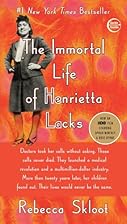
"There's a photo on my wall of a woman I've never met, its left corner torn and patched together with tape."
Description:
Her name was Henrietta Lacks, but scientists knew her as HeLa. She was a poor Southern tobacco farmer who worked the same land as her slave ancestors, yet her cells-taken without her knowledge--became one of the most important tools in medicine. The first 'immortal' human cells grown in culture, they are still alive today, though she has been dead for more than sixty years. If you could pile all HeLa cells ever grown onto a scale, they'd weigh more than 50 million metric tons--as much as a hundred Empire State Buildings. HeLa cells were vital for developing the polio vaccine; uncovered secrets of cancer, viruses , and the atom bomb's effects; helped lead to important advances like in vitro fertilziation, cloning, and gene mapping; and have been bought and sold by the billions.
Yet Henrietta Lacks remain virtually unknown buried in an unmarked grave.
Now Rebecca Skloot takes us on an extraordinary journey from the 'colored' ward of Johns Hopkins Hospital in the 1950s to stark white laboratories with freezers full of HeLa cells, from Henrietta's small, dying hometown of Clover, Virginia--a land of wooden slave quarters, faith healings, and voodoo--to East Baltimore today, where her children and grandchildren live and struggle with the legacy of her cells.
Henrietta's family did not learn of her 'immortality' until more than twenty years after her death, when scientists investigating HeLa began using her husband and children without informed consent. And though the cells had launched a multimillion-dollar industry that sells human biological materials, her family never saw any of the profits. As Rebecca Skloot so brilliantly shows, the story of the Lacks family--past and present--is inextricably connected to the dark history of experimentation on African Americans, the birth of bioethics, and the legal battles over whether we control the stuff we are made of.
Over the decade it took to uncover this story, Rebecca became enmeshed in the lives of the Lacks family--especially Henrietta's daughter Deborath, who was devastated to learn about her mother's cells. Deborah was consumed with questions: Had scientists cloned her mother? Had they killed her to harvest her cells? And if her mother was so importatn to medicine, why couldn't her children afford health insurance?
Intimate in feeling, astonishing in scope, and impossible to put down, The Immortal Life of Henrietta Lacks capture the beauty and drama of scientific discovery, as well as its human consequences." -- from the inside flap
My thoughts:
I learned much from reading this book, not only about medical history but also about ethics and about a family left in the dark for far too long.
Date read: 10/26/2013
Book #: 31
Rating: 4*/5 = great
Genre: Nonfiction
ISBN-10: 1400052173
ISBN-13: 9781400052172
Publisher: Crown Publishers
Year: 2010
# of pages: 328
Binding: Hardcover
LibraryThing page
Sunday, August 11, 2013
Midnight in Peking by Paul French
First sentence:
"By day the fox spirits of Peking lie hidden and still."
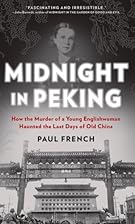 Description:
"January 1937. Life in Peking is a heady mix of privilege and scandal, opulence and opium dens, rumors and superstition. The Japanese are encircling the city, and the discovery of the mutilated body of British schoolgirl Pamela Werner at the base of the Fox Tower is chilling. Is it the work of a madman? One of the ruthless Japanese soldiers? Or perhaps the dreaded fox spirits? Historian and China expert Paul French at last uncovers the truth behind this notorious murder and offers a rare glimpse of the last days of colonial Peking." -- from the back cover
My thoughts:
This was an informative account of a mysterious murder in Peking on the brink of the Japanese occupation.
Date read: 8/10/2013
Book #: 24
Rating: 3*/5 = good
Genre: Nonfiction
ISBN-10: 9781410448965
ISBN-13: 1410448967
Publisher: Thorndike Press
Year: 2012
# of pages: 419
Binding: Hardcover
LibraryThing page
"By day the fox spirits of Peking lie hidden and still."
"January 1937. Life in Peking is a heady mix of privilege and scandal, opulence and opium dens, rumors and superstition. The Japanese are encircling the city, and the discovery of the mutilated body of British schoolgirl Pamela Werner at the base of the Fox Tower is chilling. Is it the work of a madman? One of the ruthless Japanese soldiers? Or perhaps the dreaded fox spirits? Historian and China expert Paul French at last uncovers the truth behind this notorious murder and offers a rare glimpse of the last days of colonial Peking." -- from the back cover
My thoughts:
This was an informative account of a mysterious murder in Peking on the brink of the Japanese occupation.
Date read: 8/10/2013
Book #: 24
Rating: 3*/5 = good
Genre: Nonfiction
ISBN-10: 9781410448965
ISBN-13: 1410448967
Publisher: Thorndike Press
Year: 2012
# of pages: 419
Binding: Hardcover
LibraryThing page
Sunday, June 23, 2013
Vanished Smile: The Mysterious Theft of Mona Lisa by R.A. Scotti

"According to the song, it's not supposed to rain when it's April in Paris, but the day was wet and raw."
Description:
"In Paris at the start of a radically new century, the most famous face in the history of art stepped out of her frame and into a sensational mystery.
On August 21, 1911, the unfathomable happened -- Leonardo da Vinci's Mona Lisa vanished from the Louvre. More than twenty-four hours passed before museum officials realized she was gone. The prime suspects were as shocking as the crime: Pablo Picasso and Guillaume Apollinaire, young provacateurs of a new art. As French detectives using the latest methods of criminology, including fingerprinting, tried to trace the thieves, a burgeoning international media hyped news of the heist.
No story captured the imagination of the world quite like this one. Thousands flocked to the Louvre to see the empty space where the painting had hung. They mourned as if Mona Lisa were a lost loved one, left flowers and notes, and set new attendance records. For more than two years, Mona Lisas's absence haunted the art world, provoking the question: Was she lost forever? A century later, questions still linger.
Part love story, part mystery, Vanished Smile reopens the case of the most audacious and perplexing art theft ever committed. R. A. Scotti's riveting, ingeniously realized account is itself a masterly portrait of a world in transition. Combining her skills as a history and a novelist, Scotti turns the tantalizing clues into a story of the painting's transformation into the most familiar and lasting icon of all time." -- from the inside flap
My thoughts:
I enjoyed this book about the theft and return of the Mona Lisa. I liked learning the history of the painting, how it got to France, and where it ended up during the time it was missing.
Date read: 6/23/2013
Book #: 15
Rating: 4*/5 = great
Genre: Nonfiction
ISBN-10: 0307265803
ISBN-13: 9780307265807
Publisher: Alfred A. Knopf
Year: 2009
# of pages: 227
LibraryThing page
Wednesday, March 13, 2013
Ghosts of Cape Sabine by Leonard F. Guttridge
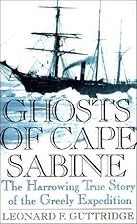
"It was 18 September, 1883."
Description:
"Twenty-five men went north. Only six returned alive.
In July 1881, an expedition compose mainly of American soldiers sailed off to establish a scientific base in the remote Arctic region of Lady Franklin Bay. What happened afterward is a remarkable saga of human achievement and human frailty, of heroism, hardship, bad luck and worse judgment. Compounded by deliberate political negligence back home, especially on the part of Secretary of War Robert Todd Lincoln, son of the late president, and increasingly fierce dissension in its own camp, the expedition's fate, and that of its would-be rescuers, eventually encompassed starvation, mutiny, suicide, shipwreck, execution. . . and cannibalism.
The story has been only partly known, and full of dark riddles, but more than seven years of research by acclaimed historian Leonard Guttridge have uncovered journals, letters, diaries, and other documentary material that for the first time provide intimate day-by-day details of the swirling events surrounding that ill-fated voyage, from turbulent birth to bizarre and tragic finale. The result is a work of nonfiction narrative that reads like a novel--a raw, vivid, harrowing adventure, brilliantly told." -- from the inside flap.
My thoughts:
Last year I read North by Roger Hubank, a fictional account of the Greely expedition. Afterwards, I wanted to read an historical account of the Greeley expedition. In this book, I learned more about problems with the first two relief attempts. I liked Guttridge's detailed end notes describing the sources from institutions such as the National Archives and the Library of Congress.
Date read: 3/12/2013
Book #: 6
Rating: 3*/5 = good
Genre: History
ISBN-10: 0399145893
ISBN-13: 9780399145896
Publisher:G.P. Putnam's Sons
Year: 2000
# of pages: 354
Binding: Hardcover
LibraryThing page
Monday, August 20, 2012
Salt: A World History by Mark Kurlansky

"I bought the rock in Spanish Catalonia, in the rundown hillside mining town of Cardona."
Description:
"Homer called salt a divine substance. Plato described it as especially dear to the gods. Today we take it for granted; however, as Mark Kurlansky so brilliantly relates in this world-encompassing book, salt-the only rock we eat-has shaped civilization from the very beginning. Its story is a glittering, often surprising part of the history of mankind.
Until about 100 years ago, when modern geology revealed how prevalent it is, salt was one of the most sought-after commodities, for without it humans and animals could not live. Salt has often been considered so valuable that it served as currency, and it is still exchanged as such in places today. Demand for salt established the earliest trade routes, across unknown oceans and the remotest of deserts: the city of Jericho was founded almost 10,000 years ago as a salt trading center. Because of its worth, salt has provoked and financed some wars; it was, as well, a strategic element in the American Revolution and the Civil War, among other conflicts. Salt taxes secured empires across Europe and Asia and have also inspired revolution (Gandhi's salt march in 1930 began the overthrow of British rule in India); indeed, salt has been central to the age-old debate about the rights of government to tax and control economies.
The story of salt encompasses fields as disparate as engineering, religion, and food, all of which Kurlansky richly explores. Few endeavors have inspired more ingenuity than salt making, from the natural gas furnaces of ancient China to the drilling techniques that led to the age of petroleum, and salt revenues have funded some of the greatest public works in history, including the Erie Canal and the Great Wall of China. Salt's ability to preserve and to sustain life has made it a metaphorical symbol in all religions. Just as significantly, salt has shaped the history of foods like cheese, sauerkraut, olives, and more, and Kurlansky conveys, in his saga and through 40 historic recipes-how they have in turn molded civilization and eating habits the world over.
Salt: A World History is veined with colorful characters, from Li Bing, the Chinese bureaucrat who built the world's first dam in 250 BC, to Pattillo Higgins and Anthony Lucas who, ignoring the advice of geologists, drilled an east Texas salt dome in 1901 and discovered an oil reserve so large it gave birth to the age of petroleum. From the sinking salt towns of Cheshire in England to the ancient salt work in southern San Francisco Bay; from the remotest islands in the Caribbean where roads are made of salt to rural Sichaun province where the last home-made soya sauce is produced, Mark Kurlansky has produced a kaleidoscope of history, a multi-layered masterpiece that blends economic, scientific, political, religious, and culinary records into a rich and memorable tale." -- from the inside flap
My thoughts:
This was a thoroughly informative book on salt and its impact on world history. I learned many new things including the fact that the word stem "-wich" as in Norwich means salt works and that there's a rock salt mine 1,200 feet below Detroit.
Date read: 8/19/2012
Book #: 29
Challenges: Off the Shelf Challenge 2012, New Author Challenge
Rating: 3*/5 = good
Genre: Nonfiction
ISBN-10: 0802713734
ISBN-13: 9780802713735
Publisher: Walker and Company
Year: 2002
# of pages: 449
Binding: Hardcover
LibraryThing page
Saturday, November 5, 2011
Shadow Divers by Robert Kurson

"Bill Nagle's life changed the day a fisherman sat beside him in a ramshackle bar and told him about a mystery he had found lying at the bottom of the Atlantic Ocean."
Description:
"In the fall of 1991, in the frigid Atlantic waters sixty miles off the coast of New Jersey, weekend scuba divers John Chatterton and Richie Kohler made a startling discovery under decades of accumulated sediment: a World War II German U-boat, its interior a maze of twisted metal and human bones. Equally astonishing: All the official records agreed that there simply could not be a sunken U-boat at that location. Over the next six years, an elite team of divers embarked on a quest to solve the mystery. Some of them would not live to see the end. Chatterton and Kohler, at first bitter rivals, were drawn into a deep bond of friendship. As the men's marriages frayed under the pressure of a shared obsession, their dives grew more daring, and each realized that he was hunting for more than the identities of a lost U-boat and its nameless crew." -- from the back cover
My thoughts:
This book combined many of my interests and knowledge. I always like reading about nautical adventures and I have worked as an archivist for nearly twenty years. I enjoyed reading how Chatterton and Kohler researched the history of World War II German U-boats and how they gathered evidence from the submarine to discover the truth.
Date read: 11/4/2011
Book #: 23
Rating: 4*/5 = great
Genre: Nonfiction
ISBN-10: 0375760989
ISBN-13: 9780375760983
Publisher: Random House
Year: 2004
# of pages: 335
Binding: Trade Paperback
LibraryThing page
Tuesday, August 30, 2011
The City of Falling Angels by John Berendt

"'Everyone in Venice is acting,' Count Girolamo Marcello told me."
Description:
"Venice--a city of masks and riddles, where narrow streets and passageways form a giant maze that confounds the uninitiated and deepens the sense of mystery. As captivating as it is elusive, the city teeters in precarious balance between endurance and decay. Architectural treasures crumble--foundations shift, ornaments fall--even as efforts to preserve them are under way. In The City of Falling Angels, John Berendt, author of the record-breaking bestseller Midnight in the Garden of Good and Evil, unveils the enigmatic Venice as only he can.
The story opens on the evening of January 29, 1996, when a sensational fire destroys the historic Fenice Opera House. The loss of the Fenice, where five of Verdi's operas premiered, is a catastrophe for Venetians, made worse by the revelation that arson might have been the cause. Arriving three days after the fire, Berendt inquires into the nature of life in this remarkable city while gradually revealing the truth about the fire. In the course of his investigations, he encounters a rich cast of characters: a hard-as-nails prosecutor who blushes when he's angered; the First Family of American expatriates facing the loss of their palace on the Grand Canal after four generations of ownership; a contemporary Venetian surrealist painter known locally as an outrageous prankster and provocateur; a twenty-first-generation master glassblower whose sons are locked in a dynastic war; and numerous others--pigeon trappers, scapegoats, hustlers, sleepwalkers, a believer in Martians, the Plant Man, the Rat Man of Treviso, and Henry James.
Berendt tells a tale full of atmosphere and surprise as the stories build, one after the other, ultimately coming together to portray a world as finely drawn as a still-life painting. The fire and its aftermath serve as a leitmotif that runs through the book, contributing to the ever-mounting suspense and revealing the city of Venice in all its magic, mystery and decadence." -- from the back cover
My thoughts:
I liked this book about Venice - its history, people and events, especially in the late 20th century.
Date read: 8/29/2011
Book #: 21
Rating: 3*/5 = good
Genre: Nonfiction
ISBN-10: 1594200610
ISBN-13: 9781594200618
Publisher: The Penguin Press
Year: 2005
# of pages: 398
Binding: Trade Paperback
LibraryThing page
Friday, March 4, 2011
Library: An Unquiet History by Matthew Battles
 First sentence:
"When I first went to work in Harvard's Widener Library, I immediately made my first mistake: I tried to read the books."
Description:
"Throughout the ages, libraries have not only accumulated and preserved but also shaped, inspired, and obliterated knowledge. Matthew Battles, a rare books librarian and a gift narrator, 'entertainingly traces the evolution of the library through the centuries,' [New York Times Book Review] from Boston to Baghdad, from classical scriptoria to medieval monasteries, from the Vatican to the British library, from socialist reading rooms and rural home libraries to the Information Age." -- from the back cover
My thoughts:
I enjoyed this engaging book about libraries, books, writing and knowledge. I liked learning about how writing on bamboo stalks influenced the look of Asian writing and how Antonio Panizzi changed the card catalog "...from an inventory to an instrument of discovery" [p. 130].
Date read: 3/3/2011
Book #: 9Challenge: Dewey Decimal Challenge 2011
Rating: 3*/5 = goodGenre: nonfiction
ISBN-10: 093325644
ISBN-13: 9780393325645
Publisher: W.W. NortonYear: 2003
# of pages: 214Binding: Trade Paperback
LibraryThing page
Tuesday, November 16, 2010
Hurry Down Sunshine by Michael Greenberg
 First sentence:
On July 5, 1996, my daughter was struck mad.
Description:
"Hurry Down Sunshine tells the story of the extraordinary summer when, at the age of fifteen, Michael Greenberg's daughter was struck mad. It began with Sally's sudden visionary crack-up on the streets of Greenwich Village, and continues, among other places , in the out-of-time world of a Manhattan psychiatric ward during the city's most sweltering months. 'I feel like I'm traveling and traveling with nowhere to go back to,' Sally says in a burst of lucidity while hurtling away toward some place her father could not dream of or imagine. Hurry Down Sunshine is the chronicle of that journey, and its effect on Sally and those closest to her--her mother and stepmother, her brother and grandmother, and, not least of all, the author himself." -- from the inside flap
My thoughts:
This was an interesting book about how mental illness affects a family. I liked how Sally's parents struggled to understand what's happening.
Date read: 11/14/2010
Book #: 50
Rating: 3*/5
Genre: Memoir
ISBN-10: 1590511913
ISBN-13: 9781590511916
Publisher: Other Press
Year: 2oo8
# of pages: 233
Binding: Hardcover
LibraryThing page
Monday, August 30, 2010
The Minds of Billy Milligan by Daniel Keyes
 First sentence:
"On Saturday, October 22, 1977, University Police Chief John Kleberg placed the area of Ohio State University's medical school under heavy police security."
Description:
"Billy Milligan came be anyone he wants to be. . .except himself.
Out of control of his own actions, Billy Milligan was a man tormented by twenty-four distinct personalities battling or supremacy over his body.--a battle which culminated in late 1977 when heawoke in jail, arrested for the kidnap and rape of three women. In a landmark trial, Billy was acquitted of his crimes by reason of insanity caused by multiple personality--the first such court decision in history--bringing to public light the most remarkable and harrowing case of multiple personality ever recorded.
Twenty-four people live inside Billy Milligan.
Philip, a petty criminal, Kevin, who dealt drugs and masterminded a drug store robbery; April, whose only ambition was to kill Billy's stepfather; Adalana, the shy, lonely, affection-starved lesbian who 'used' Billy's body in the rapes which led to his arrest; David, the eight-year-old 'keeper of the pain'; and all the others, including men, women, several children, both boys and girls, and the Teacher, the only one who can put them all together. You will meet each in this often shocking true story. And you will be drawn deeply into the mind of this tortured young man and his splintered, terrifying world." -- from the back cover
My thoughts:
This was an interesting book about someone who learned that he was rarely in charge of his actions. One scene that stuck in my mind was when "Phillip" decided to go to New York and "David" came forward and couldn't carry the weight of the duffel bag.
Date read: 8/30/2010
Book #: 46
Challenge: Celebrate the Author 2010
Rating: 3*/5 = good
Genre: Nonfiction
ISBN-10: 0553225855
ISBN-13: 9780553225853
Publisher: Bantam Books
Year: 1981
# of pages: 426
Binding: Mass Market Paperback
LibraryThing page
Thursday, August 26, 2010
Banvard's Folly: Thirteen Tales of People Who Didn't Change the World by Paul Collins
 First sentence:
"The life of John Banvard is the most perfect crystallization of loss imaginable."
Description:
"In Banvard's Folly, Paul Collins celebrates what he calls the 'forgotten ephemera of genius.' Here are thirteen unforgettable portraits of men and women who might have claimed their share of renown but who, whether from ill timing, skullduggery, monomania, the tinge of madness, or plain bad luck--or perhaps some combination of them all--leapt straight from life into thankless obscurity. Among their number are scientists, artists, writers, entrepreneurs, and adventurers, from across the centuries and around the world. They hold in common the silenced aftermath of failure, the name that rings no bells--until now." -- from the back cover
My thoughts:
This is a fascinating book about people and their tenuous claim to fame. I liked learning about the musical language "Solresol," promoted by Jean Francois Sudre and the use of blue glass to heal as promoted by A.J. Pleasanton.
Date read: 8/25/2010
Book #: 45
Rating: 3*/5 = good
Genre: Nonfiction
ISBN-10: 0312300336
ISBN-13: 9780312300333
Publisher: Picador
Year: 2001
# of pages: 283
Binding: Trade Paperback
LibraryThing page
Subscribe to:
Posts (Atom)